Symbolic Wedding Ceremony: Step-by-Step to Your Dream Celebration
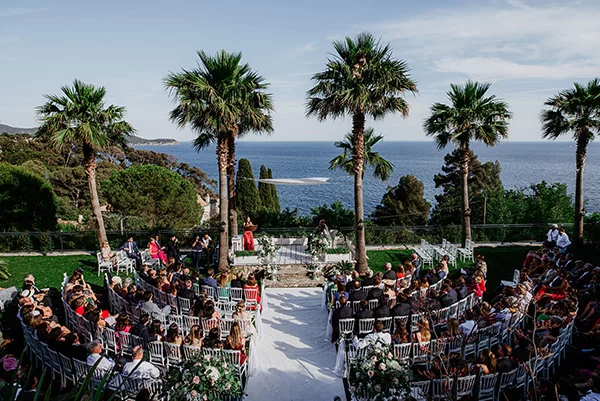
A symbolic wedding ceremony offers couples the freedom to celebrate their love in a deeply personal and meaningful way, without the constraints of legal or religious requirements. Unlike civil or religious weddings, these ceremonies are entirely customizable, allowing every detail—from vows and readings to music and rituals—to reflect the couple’s unique story. Whether held in a romantic château in the Loire Valley, a sunlit vineyard in Bordeaux, or an elegant garden along the French Riviera, a symbolic ceremony transforms the wedding day into an intimate, memorable experience that celebrates love, connection, and creativity.
Symbolic wedding ceremony: frequent questions
A civil wedding is a legally recognized ceremony conducted by a government official, focused on fulfilling legal requirements like signing the marriage license and having witnesses, and is typically short, formal, and limited in personalization. In contrast, a symbolic wedding has no legal standing and is purely ceremonial, allowing couples complete freedom to design the ceremony, choose their celebrant, write personal vows, include rituals, and celebrate anywhere, often complementing a legal marriage performed in their home country.
Having a symbolic ceremony is simple and flexible, with no legal or religious requirements. Couples choose a meaningful location and an officiant—professional or personal—and design the ceremony’s content, including vows, readings, music, and optional rituals like candle lighting or tree planting. Fully customizable, it allows couples to create a wedding that reflects their story and style, offering a unique, personal, and memorable celebration.
A symbolic wedding ceremony typically lasts 20 to 45 minutes, with shorter versions focusing on a simple welcome, vows, ring exchange, and closing, while longer ceremonies can include readings, music, personal stories, and symbolic rituals like candle lighting or wine blending. Fully customizable, couples can tailor the pace, content, and style to create either an intimate, brief celebration or a more elaborate, theatrical experience.
What is a symbolic ceremony?
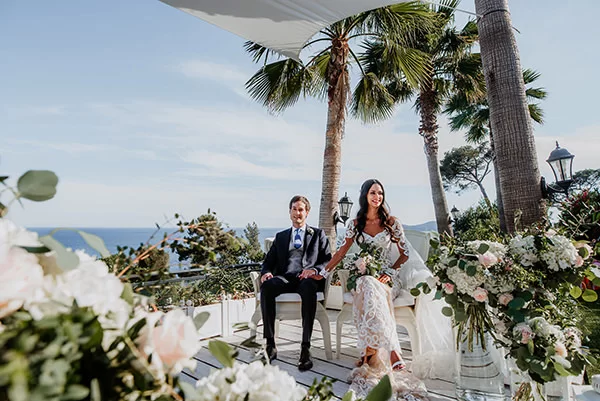
A symbolic ceremony is a wedding celebration that looks and feels like a traditional wedding, but without any legal or religious requirements. It has no binding effect in the eyes of the law, which means couples are free to shape it exactly as they wish. Instead of focusing on paperwork or official formalities, a symbolic ceremony is all about celebrating love, commitment, and personal values in a way that feels authentic.
Because it is not restricted by laws or religious structures, couples can design every element of the ceremony—from the wording of the vows to the rituals, readings, music, and location. It can take place anywhere: a Tuscan vineyard, a Roman villa, a cliffside on the Amalfi Coast, or even a private garden. The flexibility makes it especially popular for destination weddings, since couples can legally marry in their home country first, and then enjoy a symbolic ceremony abroad that reflects their personalities and cultural influences.
What does a symbolic ceremony look like?
A symbolic ceremony looks very much like a traditional wedding ceremony—but with complete freedom to design it your way. It usually begins with a processional, music, and a welcome from the celebrant, followed by readings, vows, and symbolic rituals. Couples may exchange rings, say personal promises, or include cultural traditions, but without the pressure of legal or religious requirements. The structure can be as formal or casual as you like: some couples choose elegant, poetic wording, while others prefer a lighthearted, modern tone.
Visually, it can take place anywhere that feels meaningful. Imagine an arch of flowers in a vineyard, a ceremony under olive trees, or an intimate setup by the sea. Symbolic rituals—like blending wine, lighting candles, planting a tree, or exchanging letters—make the ceremony unique and memorable. What truly defines a symbolic ceremony is its flexibility: it looks and feels like a wedding, but is crafted entirely around your story, values, and vision for the day.
Why should you have a symbolic ceremony?
A symbolic wedding ceremony is the ultimate choice for couples who want freedom, intimacy, and creativity on their wedding day. Unlike civil or religious ceremonies, it carries no legal restrictions, allowing you to design every detail according to your values and story. From the words spoken to the rituals performed, everything is tailored to reflect your personalities and the journey you’ve shared together. It’s a celebration that prioritizes love, emotion, and meaning over formalities.
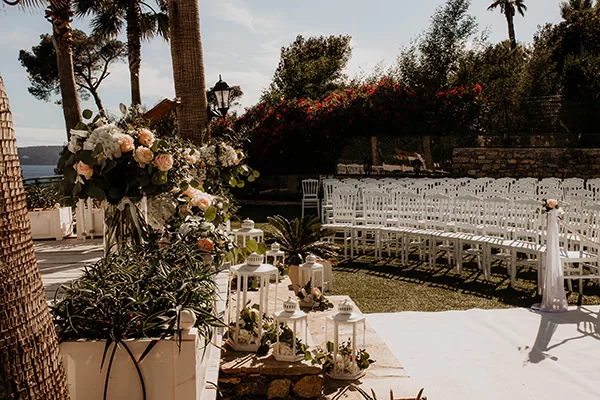
Another reason couples love symbolic ceremonies is the flexibility of location. You’re not tied to a town hall or religious venue—you can exchange vows on a cliffside at sunset, in a vineyard, inside a castle, or even in a private garden. This flexibility also makes it the perfect solution for destination weddings, where legal requirements can be complicated or restrictive. Whether you want something simple and intimate or grand and theatrical, a symbolic ceremony lets you create the experience you’ve always envisioned.
Who performs a symbolic wedding ceremony?
One of the most beautiful aspects of a symbolic wedding ceremony is that it can be performed by almost anyone the couple chooses. Many opt for a professional celebrant/officiant, who brings experience, structure, and the ability to craft a personalized script that feels polished and meaningful. Celebrants are also a great choice for destination weddings, as they are often bilingual and skilled at weaving cultural traditions, rituals, and storytelling into the ceremony, ensuring it flows smoothly and resonates with all guests.
Others prefer to have a close friend or family member act as officiant, which adds an intimate and emotional touch. Having someone who knows the couple personally can make the ceremony feel even more heartfelt, as the words and anecdotes come from shared history and genuine connection. Since there are no legal requirements in a symbolic wedding, couples have full freedom to decide who stands at the altar with them—whether it’s a seasoned professional, a loved one, or even a combination of both. This flexibility is what makes symbolic ceremonies so unique and personal.
What is a symbolic wedding officiant?
A symbolic wedding officiant is the person who leads and conducts a symbolic (non-legally binding) wedding ceremony. Unlike an officiant in a legal wedding, they are not required to be licensed or registered by the state, since the ceremony has no legal status. Instead, their role is entirely focused on creating and delivering a meaningful, personalized experience that reflects the couple’s story, values, and vision.
In addition, a symbolic officiant often works closely with the couple to craft the script, incorporate personal elements such as custom vows, readings, or rituals, and set the tone of the ceremony—whether formal, spiritual, or lighthearted. As a result, they have far more creative flexibility than a legal officiant. Therefore, while they do not handle any official paperwork, they play a key role in shaping the emotional and narrative core of the wedding ceremony.
Symbolic wedding vs legal wedding
A symbolic wedding and a legal wedding serve different purposes, although they can look quite similar on the surface. A legal wedding is a civilly recognized union, meaning it requires official documentation, a licensed officiant, and compliance with local laws in order to be valid. In contrast, a symbolic wedding has no legal standing; instead, it is a personalized ceremony created to celebrate the couple’s commitment in a more flexible and meaningful way. For this reason, many couples choose to complete the legal formalities separately—often in a courthouse—before or after their symbolic celebration.
Moreover, a symbolic ceremony allows for far greater creative freedom. Couples can write their own vows, choose any location, and include cultural or spiritual elements without restrictions. On the other hand, legal ceremonies may involve specific wording, procedures, or timing dictated by local regulations. Therefore, while a legal wedding ensures official recognition, a symbolic wedding offers a more tailored and emotionally expressive experience.
Symbolic wedding ceremony ideas
Here are some ritual ideas to make your symbolic ceremony unique:
Unity Candle
Each partner lights a candle, then together they light a central one, symbolizing two lives becoming one.
Sand Ceremony
Different colored sands are poured into one vessel, representing blending lives and families.
Wine or Cocktail Blending
Mixing two wines (or ingredients for a signature cocktail) to symbolize harmony.
Tree Planting
Planting a sapling together as a symbol of growth and roots for the marriage.
Water Ceremony
Pouring water from two vessels into one, or releasing flowers into water, symbolizing union and flow.
Ring Warming
Passing rings among guests so everyone “warms” them with love and wishes before the exchange.
Handfasting
Celtic ritual of binding hands with ribbons or cords to signify commitment.
Love Letters & Time Capsule
Writing letters to each other, sealing them with wine or keepsakes to open on a future anniversary.
Guest Blessings
Inviting family and friends to offer short wishes, readings, or blessings.
Symbolic wedding ceremony script
Creating a unique ceremony script is essential for crafting a symbolic wedding ceremony that truly reflects your love story. Start by outlining the structure of the ceremony, including the order of events and any rituals or readings you want to include. This will give you a framework to work within and ensure that the ceremony flows smoothly and logically.
When writing the script, focus on the language and tone that best reflects your relationship and personalities. Whether you prefer a formal and elegant ceremony or a casual and lighthearted one, make sure the script captures the essence of who you are as a couple. Include personal anecdotes, quotes, and references that are meaningful to you, and don’t be afraid to inject some humor if it feels right.
Consider working with your officiant to develop the script, especially if they are a close friend or family member. They can provide valuable input and help ensure that the ceremony is cohesive and well-paced. Once you have a draft of the script, read it aloud to see how it sounds and make any necessary adjustments. This will help you create a ceremony that is not only unique and personal but also engaging and memorable for your guests.
In general, this is how a symbolic wedding ceremony script is structured:
Welcome / Opening Words
- Officiant welcomes guests.
- Sets the tone for the ceremony.
Example themes: love, partnership, commitment, joy.
Acknowledgments / Optional Reading
- Recognize family, friends, and loved ones.
- Optional readings, poems, or quotes about love and partnership.
- Can include cultural, literary, or personal selections.
Couple’s Story / Words About Love
- Officiant shares a brief story about the couple (how they met, meaningful experiences).
- Highlights the couple’s values and commitment.
Declaration of Intent
Officiant asks each partner:
“Do you take [partner’s name] to be your partner, to love and cherish, in all circumstances, as your equal and companion?”
Vows
- Personal vows: Partners speak their own promises.
- Optional standard vows: Can be read or repeated after officiant.
Ring Exchange
- Officiant explains symbolism of rings (eternity, unity).
- Each partner places a ring on the other’s finger, repeating a short phrase, e.g., “With this ring, I promise to love you always.”
Unity Ritual / Optional Symbolic Gesture
- Optional: candle lighting, sand ceremony, handfasting, tree planting, wine sharing, etc.
- Represents the joining of lives and families.
Closing Words / Blessing
- Officiant shares final thoughts, blessings, or reflections on love and marriage.
- Example: “May your life together be filled with joy, respect, and endless love.”
Pronouncement
- Official declaration: “By the love you share and the promises you have made, I now pronounce you partners in life. You may kiss.”
Writing Your Own Vows: Tips and Inspiration
Writing your own wedding vows is one of the most personal and meaningful aspects of a symbolic wedding ceremony. It’s an opportunity to express your love and commitment in your own words, creating a moment that is uniquely yours. Start by reflecting on your relationship and what makes it special. Think about the qualities you love most about your partner, the experiences you’ve shared, and the promises you want to make for the future.
When writing your vows, aim for a balance between heartfelt emotion and sincerity. Avoid clichés and generic phrases, and instead focus on specific moments and feelings that are unique to your relationship. Consider incorporating anecdotes or inside jokes that highlight your bond and bring a smile to your partner’s face. Remember, your vows don’t have to be perfect—they just have to be genuine and from the heart.
If you’re feeling stuck, look for inspiration in literature, music, and film. Quotes from your favorite books, songs, or movies can provide a starting point for your vows and help you articulate your feelings. You can also find inspiration in traditional wedding vows from different cultures and religions, and adapt them to fit your own beliefs and values. The most important thing is that your vows reflect your true feelings and the unique connection you share with your partner.
How to Incorporate Cultural Traditions
Incorporating cultural traditions into your symbolic wedding ceremony can add depth and richness to the celebration, honoring your heritage and bringing a sense of continuity with the past. Start by researching the wedding customs and rituals from your cultural background, and consider how they can be adapted to fit your symbolic ceremony. This can be a wonderful opportunity to involve older family members and learn more about your family’s traditions.
For example, in many African cultures, the jumping the broom ceremony is a traditional ritual that symbolizes the couple’s new life together. The couple jumps over a broom, which is often decorated with ribbons and flowers, as a way of sweeping away the old and welcoming the new. This ritual can be adapted to fit a symbolic ceremony and can be a fun and meaningful way to honor your heritage.
In Hindu weddings, the Saptapadi or “seven steps” is a key ritual where the couple takes seven steps together, each step representing a vow or promise. This ritual can be incorporated into a symbolic ceremony by having the couple take seven steps together and make their own personalized vows at each step. This not only honors the cultural tradition but also allows the couple to express their unique commitment to each other.
Symbolic wedding certificate
A symbolic wedding certificate is a non-legally binding document that commemorates a couple’s ceremony and commitment to one another. Unlike an official marriage certificate, it holds no legal status; however, it is often beautifully designed and personalized, making it a meaningful keepsake from the day. Typically, couples sign the certificate during or after the symbolic ceremony, sometimes alongside witnesses, as a way to mark the moment in a tangible and ceremonial form.
Moreover, many officiants incorporate the signing of a symbolic certificate into the flow of the ceremony, adding a ritualistic and emotional touch that mirrors a legal wedding. In this context, professionals like Cassia Thomas can be especially helpful, as she works with a network of experienced officiants who offer this option. As a result, even without legal standing, the symbolic certificate becomes a cherished part of the celebration, blending tradition with creative freedom.
Symbolic wedding ceremony abroad
Symbolic wedding ceremony in France
To do civil wedding in France, at least one of the partners must have a connection to the town where the wedding takes place, usually by residence (living in the commune for at least 40 days), employment in the commune or family ties (parents born there, etc.). Due to that, many foreigners couples choose to do a symbolic ceremony for their destination wedding in France.
In France, a symbolic ceremony has no legal standing, meaning it is purely celebratory and personalized. A symbolic wedding ceremony in France is more about personal storytelling, style, and sensory experience, often set in picturesque locations and enhanced with French cultural touches. It contrasts with more standardized symbolic ceremonies elsewhere that may focus mainly on vows and ritual structure. Symbolic ceremonies in France tend to be shorter and more curated, usually 20–45 minutes. French symbolic weddings may integrate literature, poetry, or philosophical reflections:
- Excerpts from Victor Hugo, Paul Éluard, or contemporary French writers
- Emphasis on spoken words, storytelling, and personal anecdotes rather than just rituals.
Symbolic wedding ceremony in Italy
Couples who choose Italy for their destination wedding often opt for a symbolic ceremony. Much like in France, this type of celebration has no legal standing—it is entirely about joy, personalization, and creating an unforgettable experience. In Italy, the symbolic ceremony beautifully weaves together culture, scenery, and tradition, allowing couples to express their love story in a uniquely meaningful way.
Italian symbolic weddings are rich in artistic and sensory details. They may feature literary or poetic readings from Dante, Petrarch, or contemporary writers; live music such as opera, string quartets, or traditional Italian songs; and rituals inspired by wine, food, and nature. From blending wines into a single glass, to planting an olive tree in Tuscany or Puglia, to sharing bread and wine as symbols of unity, these moments highlight the essence of Italian life. Unlike the more philosophical and refined tone often found in France, Italian ceremonies lean toward the romantic, emotional, and sensory—filled with music, fragrance, flavors, and sweeping views. They are warm, convivial, and inclusive, often flowing seamlessly into the aperitivo or festa, perfectly in tune with Italy’s legendary hospitality.
Destination wedding planner in France and Italy
Looking forward to a symbolic wedding ceremony in Europe? Wedding planner Cassia Thomas can expertly guide you through the process. She is a renowned destination wedding planner, celebrated for creating exceptional, fully personalized celebrations across the continent. With extensive experience, she combines timeless elegance, cultural sensitivity, and meticulous organization. Cassia partners with premier venues and top-tier vendors to ensure every detail unfolds seamlessly. Her deep expertise in international weddings — from navigating legal requirements to designing unforgettable experiences — makes her an invaluable ally for couples planning their dream day from abroad.
Get in touch with Cassia Thomas:
Phone: +33 6 60 39 05 44
Email: hello.kis.wedding@gmail.com